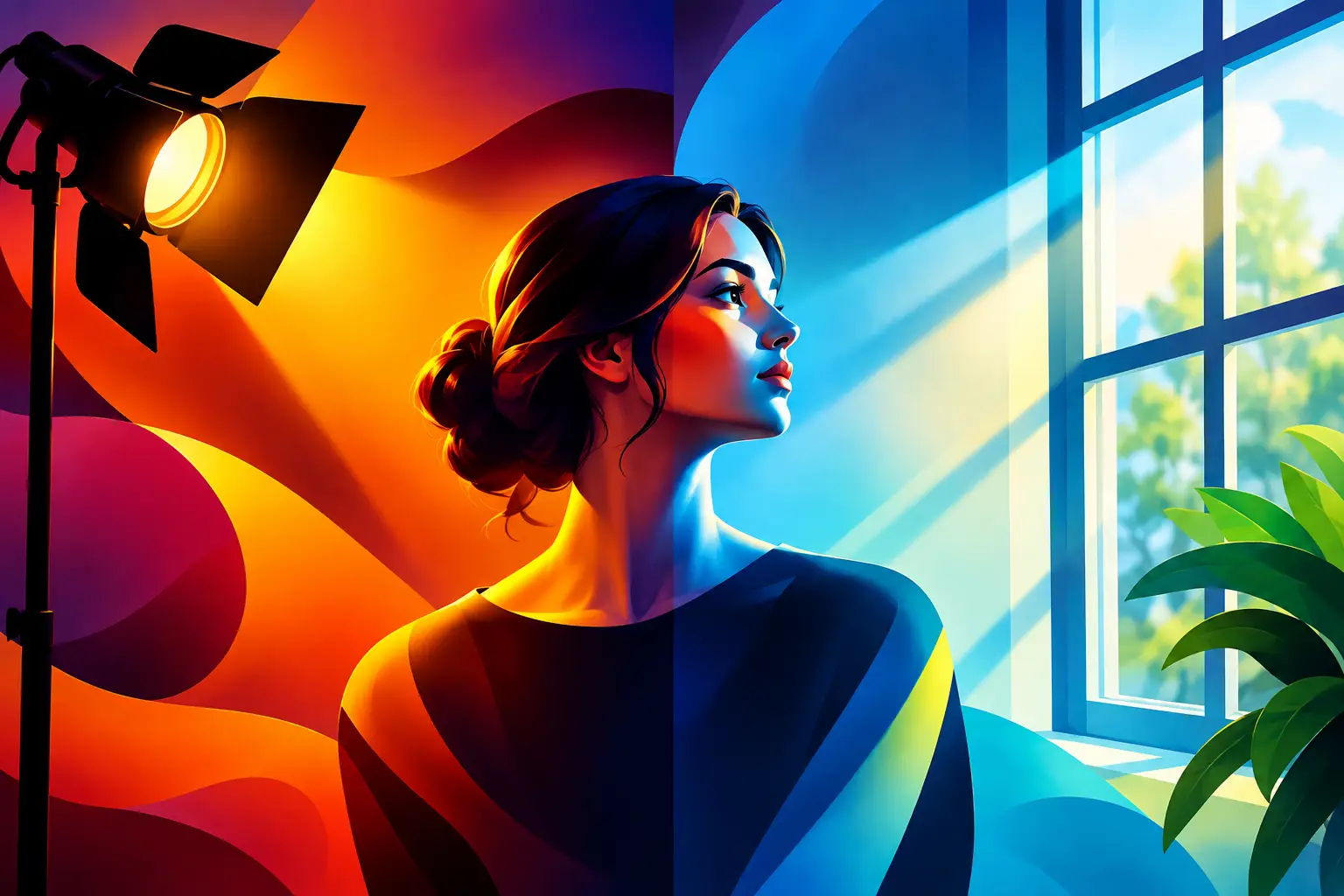
A brief can look perfect on a moodboard and still fall apart when the light moves. Controlled lighting versus window light is not simply a technical choice between flash and sunshine. It affects the pace of the day, crew size, styling decisions, shot consistency and the final character of the work.
For photographers, directors, producers and brand teams, the useful question is not which is better. It is which environment gives this particular idea the best chance of landing.
Controlled lighting versus window light
Controlled lighting gives you repeatability. You decide where the key light sits, how hard the shadows fall, how much separation the subject has from the background and when the scene is ready to shoot. Window light gives you an immediate sense of place: soft, directional, lived-in and difficult to reproduce exactly.
Neither approach is automatically more premium. A clean e-commerce set can need the accuracy of a blackout space. A skincare campaign might need the imperfect warmth and gentle fall-off of daylight. The decision should come from the required image, not a default working habit.
What controlled lighting is built for
A controlled environment removes the variables that can slow a production down. In a blackout-capable studio, daylight cannot spill into a set as clouds pass or the afternoon closes in. That matters when a campaign needs the same exposure and colour across a full product range, or when stills and moving image have to match across several setups.
It also gives the team more freedom to build a look rather than react to one. Hard flash, large soft sources, coloured gels, projected texture, sharp pools of light and high-contrast portraiture all become practical options. You can shoot a night look at midday, maintain a consistent scene through a long winter afternoon, and return to the same setup without relying on the weather.
For video, control becomes even more valuable. Window light changes within a take and may shift in colour temperature as conditions outside change. That is manageable for short-form social content with an intentionally natural feel. It is less helpful when dialogue, pack shots or a sequence of product demonstrations need continuity over several hours.
The trade-off is that control takes preparation. Lighting needs to be shaped, tested and adjusted. A smaller crew can create a strong result, but the day benefits from a clear plan: references, lighting approach, shot list, power requirements and enough time to finesse each setup. A controlled studio does not make decisions for you. It gives you the conditions to make them precisely.
When window light earns its place
Window light brings an atmosphere that can be hard to manufacture. It carries subtle variation, softer transitions and a sense that the subject belongs in a real moment rather than on a constructed set. For fashion editorials, portraits, lifestyle content, food, beauty and relaxed brand storytelling, that can be exactly the point.
A daylight-led space is often fast to work in at the start of the day. Place the subject near the windows, shape the light with diffusion or negative fill, and there is already a visual direction in the frame. This can suit leaner shoots where the team wants to focus on performance, styling and movement rather than build a full lighting setup from scratch.
It is also useful when a client wants content that feels credible on social platforms. Natural light can make polished work feel less over-produced, particularly when paired with simple art direction and a considered location. The key word is considered. Window light is not a shortcut to good imagery. It still needs control through positioning, exposure, reflectors, flags and a close read of the forecast.
Its limitation is consistency. A bright Dublin morning can become a grey afternoon quickly. Direct sun can create beautiful contrast, but it can also make matching frames difficult. If the deliverables require a fixed look across a full day, schedule your daylight-dependent hero shots first and allow room to adapt.
Choose by deliverable, not aesthetics alone
A visual reference can make daylight and studio flash look deceptively similar. The production requirement underneath is often very different. Start by looking at what the final assets need to do.
For product catalogues, cut-outs, e-commerce, repeatable campaign assets and detailed pack shots, controlled lighting is usually the practical choice. It supports accurate colour, consistent angles and reliable exposure. The work is easier to retouch, easier to expand later and easier to keep aligned when multiple people or products are involved.
For editorial portraits, social-first films, founder stories, fashion content or relaxed lifestyle scenes, window light may carry more of the desired tone. It can keep skin natural, make a set feel open and allow talent to move through the space with less interruption from stands and modifiers.
Some briefs need both. A campaign may require bright, daylight-led portraits alongside graphic product images with crisp shadows. In that case, splitting the day between distinct environments is more efficient than forcing one room to do everything. Lit Studios was built around that choice: The Loft for daylight character and The Void for controlled blackout-corner work.
Plan the shoot around the light you cannot change
If window light is essential, book the hours that serve it. Morning and early afternoon often give the greatest usable window, though the exact result depends on season, weather and the direction of the windows. Build hero frames around the strongest expected light, then use later time for close-ups, detail shots, styling changes or setups that can tolerate softer conditions.
If the brief depends on controlled lighting, use the freedom properly. You are not tied to the clock, so plan around crew efficiency instead. Group shots that share a lighting setup. Capture all product angles before changing the key source. Lock the exposure and camera position when consistency matters. For video, photograph or note each setup so a pickup shot can be rebuilt accurately.
A mixed-light approach needs extra discipline. Daylight spilling into a flash setup can shift colour and contrast, while an artificial source added to a window scene can look obvious if the direction and softness do not match. Choose one source as the dominant look, then use the other only with intention.
Questions to settle before booking
Before choosing a studio environment, establish whether the final work needs exact repeatability or a more spontaneous feel. Confirm whether stills and video must match, whether the shoot can move with weather changes, and whether the art direction relies on direct sun, soft daylight or a constructed lighting effect.
Also consider the practical scale. A one-person portrait session can work beautifully with a window, a reflector and a small footprint. A multi-look campaign with products, talent, agency stakeholders and moving image normally benefits from a space where the light stays fixed while the set evolves.
The finish is set before post-production
Retouching and grading can refine a result, but they cannot fully replace a lighting decision made on set. If the image needs precise highlights, controlled shadow detail and uniform colour, create that foundation with controlled light. If it needs softness, natural fall-off and a real-world sense of time and place, protect the daylight rather than trying to imitate it later.
The strongest productions are clear about this from the start. Choose the environment that supports the brief, give the team enough time to use it well, and let the light do the work it was chosen for.
Leave a Reply