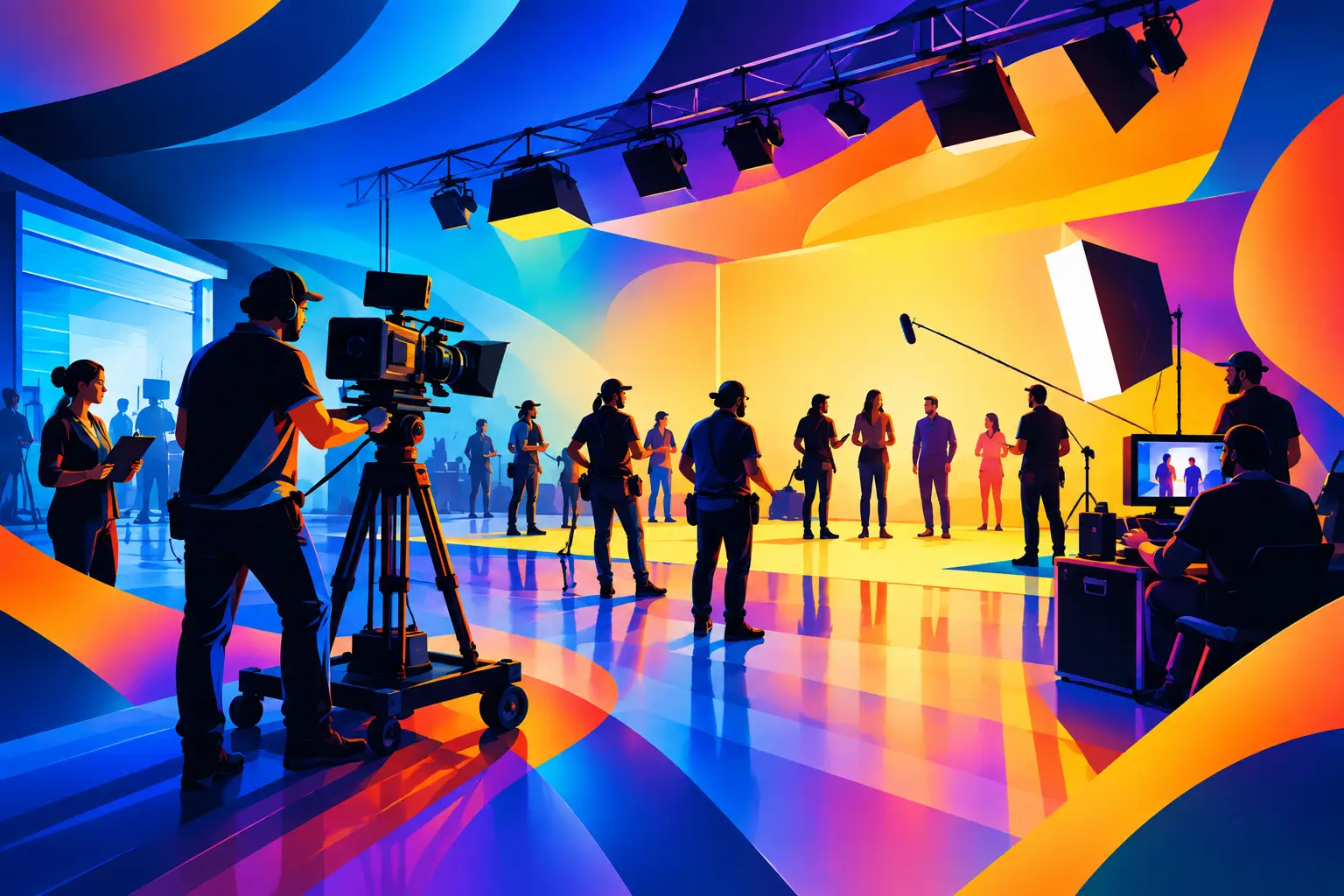
A packed call sheet does not automatically mean a studio is too small. The real question behind can studios accommodate large crews is whether the room can support the working production – not simply fit everyone through the door. A photographer, director, client team, agency, talent, HMU, styling, camera, lighting, sound and runners may all need to be present. But they do not all need to occupy the shooting area at once.
For commercial photography, video, branded content and events, a studio works best when the brief, crew flow and equipment footprint are planned as one. Get that right and a focused space can feel calm, productive and properly set. Get it wrong and even a generous room becomes a tangle of cases, stands and people waiting for a clear line of sight.
Can studios accommodate large crews? It depends on the setup
Crew size matters, but it is only one part of the decision. A ten-person stills team with a small product set can be easier to accommodate than a six-person video crew running a cinema package, multiple lighting units, sound, monitors and a moving set build.
Start with the actual production footprint. Ask how much clear floor is required for the set, camera position and lighting. Then account for everything that sits around it: flight cases, rails, props, food, client viewing, charging, data management and personal belongings. The usable space is what remains once the working areas are in place.
The shooting style changes the answer too. A portrait session may need room for a subject, photographer and a tight lighting setup. A fashion campaign can require a wider working area for movement, styling changes and full-length frames. Video brings another layer, particularly when boom operation, sound control, tracks, teleprompters or multiple camera angles are involved.
A daylight studio and a blackout environment also place different demands on a crew. Daylight-led work can benefit from a lighter, editorial rhythm, but may require careful management of changing conditions and window positions. A controlled blackout corner gives the lighting team greater consistency, though the production still needs enough space to build, adjust and safely move around the setup. At Lit Studios, the choice between The Loft and The Void should begin with that visual and operational reality.
Plan the studio around zones, not headcount
The simplest way to make a larger crew work is to separate the room into clear zones. This protects the shooting area and stops every department from competing for the same patch of floor.
For a busy studio day, establish space for four distinct functions:
- The set and camera lane, kept clear for talent, camera and active lighting adjustments.
- A technical area, where cases, batteries, media, chargers and spare kit are managed.
- A prep area, for styling, wardrobe, props, grooming and quick resets.
- A client or agency position, placed where stakeholders can review work without interrupting the crew.
These do not need to be separate rooms. They need boundaries. Tape marks, a designated table, a clear route to the exit and a quick pre-light briefing can make a meaningful difference. When everyone knows where their kit lives, where they can stand during takes and who has final approval, the studio feels considerably larger.
It is equally useful to consider who is essential on the floor at each point in the day. During a lighting adjustment, the photographer, DP, gaffer and assistant may need direct access. During a take, stylists and client teams can step back. During playback or image review, camera and lighting can use the pause to reset. This rotation keeps the working set focused without excluding anyone from the process.
Access, load-in and turnaround set the pace
A studio booking can look generous on paper and still feel pressured if load-in has not been allowed for. Large crews often arrive with more than lighting and camera kit. There may be set pieces, wardrobe rails, product stock, catering, laptops, monitors, grip equipment and personal bags. Each item needs a route from vehicle to studio, then a sensible home once inside.
Confirm the access plan before the shoot day. Know who is bringing what, the order in which departments arrive and whether bulky equipment needs to be built immediately or can stay packed until required. One person should own the kit list so duplicate items and last-minute surprises are less likely.
Timing matters as much as floor space. A tight half-day booking can be ideal for a compact content shoot with a prepared team. A larger campaign often benefits from additional time at the start and end for a clean build, safety checks, data wrangling and strike. Rushing the load-out is how equipment gets misplaced, sets get damaged and the final hour loses its shape.
If the production includes frequent talent changes, multiple looks or a complex prop sequence, build that into the schedule rather than treating it as background activity. A studio can accommodate a substantial team when call times are staggered and departments are not all trying to prep at once.
Keep the brief visible
Large crews become inefficient when decisions drift. A printed shot list, reference board and running order give every department a shared point of reference. This is especially valuable when client, agency and production teams are all present.
Before call time, agree the non-negotiables: the hero frame, the required formats, the number of looks, the lighting direction and the approval process. If the client needs to sign off every setup, allow for that. If the campaign needs fast social cut-downs alongside stills, identify which shots need motion coverage and when. These conversations prevent the familiar mid-afternoon moment when a simple shoot suddenly acquires three extra deliverables.
A producer or shoot lead should also set the communication rhythm. Not every update needs to happen at the set edge. A quick check-in between looks keeps feedback moving while letting camera, lighting and talent maintain concentration.
Safety and comfort are production infrastructure
More people and more kit increase the need for clear working practice. Cables should be managed, exits kept open and stands positioned so they cannot be knocked during a quick change. Hot lights, generators, haze, water effects or overhead rigging may introduce further requirements, so raise them with the studio before booking rather than arriving with assumptions.
Comfort has a practical impact too. A crew that has somewhere to place coats, eat between setups and step away from the active set is easier to manage. Talent needs privacy for changing and grooming. Clients need a place to review without blocking a camera route. These details are not decorative extras – they keep the day moving.
There is a trade-off. Bringing every decision-maker to set can speed up approvals, but it can also crowd the room and create conflicting direction. For some productions, a smaller on-site client group with a dedicated remote review process is the better choice. For others, particularly tactile product, fashion or art-directed work, having the full creative team present is worth the tighter choreography.
Choose the right environment for the brief
The best studio for a large crew is not always the biggest-looking room. It is the environment that removes the most variables from the job. If the brief depends on precise, repeatable lighting, a controlled blackout space may reduce the time and equipment needed to achieve the result. If the work calls for natural texture, lifestyle energy or a softer editorial feel, a daylight space may allow the team to work with less construction.
Think beyond the first frame. Consider the number of setups, the amount of kit required, whether sound matters, how quickly talent needs to move, and whether the crew will need a reset area throughout the day. A location that suits one hero shot but slows every transition may not be the efficient option.
Large crews can work exceptionally well in a studio when the day is designed around the work, not around a headcount. Build a clear floor plan, stagger the moving parts and give each department a defined place. The result is not just more room. It is a calmer set, sharper decisions and more time to make the images worth gathering everyone for.
Leave a Reply