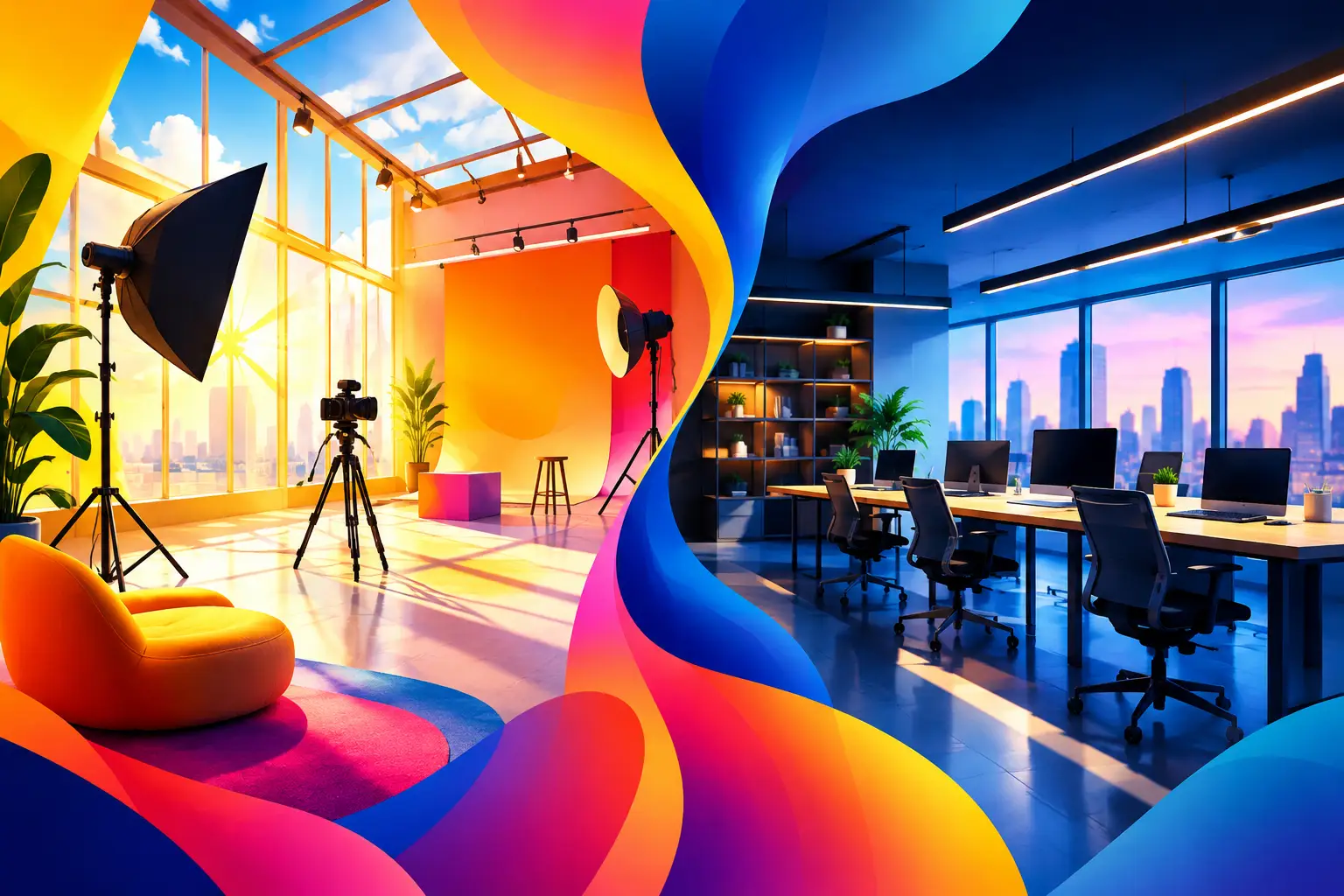
A window seat, a white wall and a few desks can look like an easy content set-up. Until the camera is rolling. The daylight studios versus offices decision usually comes down to a simple question: are you borrowing a workspace for a shoot, or choosing a space designed to support one?
For quick founder-led videos or informal team portraits, an office can be the right call. It brings context, convenience and a recognisable business setting. But when a brief needs repeatable results, room for a crew and a visual identity that does not compete with the subject, a purpose-built daylight studio changes the production equation.
Daylight studios versus offices: the real difference
The difference is not simply that one has more natural light. It is about how much of the day you spend working around the room rather than making the work.
An office is built for meetings, screens, storage and daily operations. Its windows, overhead lighting, furniture layout and circulation are designed around staff, not camera position. A daylight studio is built around usable light, adaptable space and the practical needs of image-making. That means clearer shooting areas, more intentional surfaces and the freedom to shape the frame without moving half a workplace out of it.
Neither option is automatically better. If the office itself is central to the story, filming there can add credibility. A recruitment film, leadership interview or workplace culture campaign often benefits from showing the real environment. The trade-off is that every visual decision has to work around the operational reality of that environment.
For product campaigns, editorial portraits, social content batches and lifestyle photography, the studio often offers a cleaner starting point. The room can carry the look without forcing the team to explain away distracting details in every frame.
Natural light needs room to work
Daylight is valued for its softness, pace and sense of realism. It suits skin, fabric, food, interiors and lifestyle-led work particularly well. It can make content feel immediate without making it look casual.
But good daylight production is not just a matter of placing talent beside a window. Direction matters. So does window size, the distance between subject and background, reflected light from surrounding surfaces and the ability to control contrast. In a busy office, bright windows may be paired with dark furniture, coloured walls or ceiling panels that cast unwanted tones across the subject.
A daylight studio gives the team more options. You can work with the available light when it is right, soften it when the contrast rises, or build it up with supplementary fixtures when consistency matters. It is the difference between accepting the room’s conditions and using them as part of the creative plan.
Dublin weather adds another layer. A cloud cover can create beautiful, even light for photography, while a sudden break in the clouds can shift exposure and shadow direction within minutes. That does not make daylight unreliable. It means the shoot needs a space where the crew can respond without losing momentum.
When daylight is the look
Choose a daylight-led space when the brief calls for warmth, texture or a more editorial feel. It works especially well for fashion, beauty, e-commerce with lifestyle elements, food, creator campaigns, brand portraits and social-first video.
The most effective daylight work often looks effortless because the environment has already done much of the visual work. A considered studio gives art direction room to breathe, whether that means building a simple set, bringing in furniture or keeping the frame deliberately spare.
Control is where offices fall short
The common issue with office shoots is not a lack of light. It is a lack of control.
Overhead LEDs can introduce colour shifts and flicker on video. Glass partitions create reflections. Meeting rooms may be too tight for a camera, key light, sound recordist and client monitor to sit comfortably in the same space. Air handling, phones, lifts and adjacent conversations can turn a clean interview recording into a stop-start process.
These constraints are manageable for a small, agile shoot. They become expensive when a larger team is waiting on resets, sound fixes or the next available corner with no one walking through it.
A studio does not remove every production variable, but it removes many avoidable ones. There is room to place the camera where the composition needs it, rather than where a desk happens to allow it. Talent can be positioned for the best light. Styling can remain in place between takes. Equipment has a home rather than becoming an obstacle in a corridor.
For work that needs a fully controlled image, daylight may not be the answer at all. A blackout environment is better suited to precise lighting builds, high-contrast portraits, glossy product work, green screen requirements or concepts where time of day cannot influence the final frame. At Lit Studios, The Loft and The Void make that choice straightforward: one offers a daylight space, while the other is built for controlled blackout-corner work.
Consider the crew, not just the frame
A location can look perfect in a recce and still be difficult on the day. The practical question is whether the space supports everyone needed to make the shot happen.
An office can be efficient for a lightweight team: a photographer, one assistant and a small client group. Once you add producers, stylists, hair and make-up, talent, lighting, sound and agency stakeholders, the working area shrinks quickly. The visual impact is only part of it. Crew comfort affects pace, and pace affects budget.
Studios are typically easier to organise around distinct production zones. The shooting area stays clear. Equipment can sit nearby. Talent has a place to wait or prepare. Clients can review work without standing in the middle of a set. That separation keeps the day calmer, especially when multiple deliverables are being captured from one booking.
For an office shoot, be honest about what the space can carry. If the client needs authentic workplace footage, consider using the office for selected scenes and moving campaign stills or product content into a studio. The result can feel more varied while protecting the schedule.
Backgrounds, brand and visual longevity
Office backgrounds date quickly. Screens display old interfaces, wall graphics change, seasonal decorations appear, and furniture can make the work feel tied to a particular era or business trend. That may be useful for documentary-style content, but it can limit the lifespan of a campaign.
A studio gives a brand more neutrality. That does not mean every image has to be a blank white frame. It means the background is a decision. You can introduce colour, texture, props, set dressing and styling in a way that supports the campaign rather than inherits whatever is already in the building.
This is particularly useful when a content day needs to produce assets for several channels. A hero image, vertical social video, cut-down product clips and behind-the-scenes material can all come from one set-up, with controlled changes between each look. In an office, those variations often require more compromise.
Budget: look beyond the hire fee
An office appears cheaper because the room is already available. Sometimes it is. For a short internal film with minimal kit, there may be little reason to hire elsewhere.
The real cost is the time spent adapting it. Factor in clearing desks, covering distracting signage, managing staff movement, finding power, dealing with sound interruptions and returning the room to normal afterwards. If the shoot disrupts a full working day, that operational cost belongs in the calculation too.
A studio hire is a visible line item, but it can make the production more predictable. A cleaner set-up, fewer interruptions and better crew flow can reduce the number of hours needed to deliver the same work. It also gives the creative team permission to focus on the brief rather than apologising for the location.
Choose the space that serves the brief
Start with the image, then work backwards. If the message relies on showing your real team in their real workplace, use the office and plan carefully around its limitations. If the aim is a polished visual system that can support multiple assets, a daylight studio is usually the more efficient foundation.
Ask what needs to stay consistent across the day: colour, exposure, sound, styling, background or pace. The more of those answers matter, the more valuable a purpose-built space becomes.
The best location is not the one that looks good before the crew arrives. It is the one that lets the team keep making good work after the first set-up, the weather change and the third round of approvals.
Leave a Reply