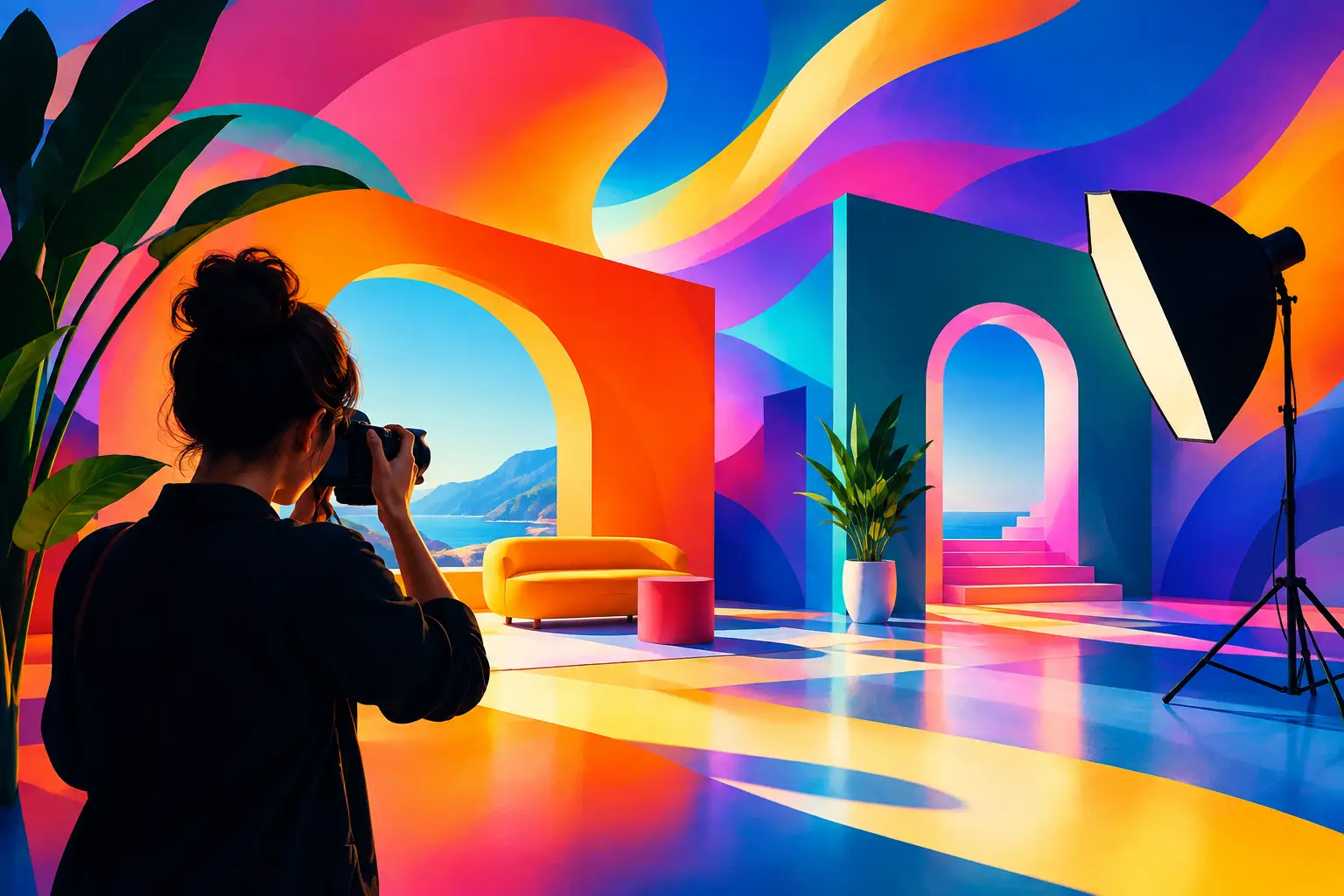
A strong brief can lose momentum quickly in the wrong room. If you need precise shadows, consistent product colour and a controlled set, window light becomes a problem. If the work calls for movement, texture and an editorial feel, a sealed-off studio can make everything look overly constructed. Choosing a creative venue starts with the image you need to make, not simply the date you need to fill.
For photographers, videographers, producers and brand teams, the right space removes friction before crew call. It gives the lighting team a dependable base, gives talent room to work and gives the client confidence that the final assets will match the treatment.
Start with the visual direction
Before comparing square footage or day rates, define the conditions the brief requires. Is the campaign clean and studio-led, or does it need the softness and character of daylight? Are you shooting stills, motion or both? Will the content live across e-commerce, social, editorial and paid media, where multiple formats may need to be captured in one session?
A venue should support that answer without forcing unnecessary workarounds. For a beauty packshot, a product film or a considered portrait, lighting control is often the priority. For fashion, lifestyle, food or creator-led content, natural light may be part of the visual language. Neither is inherently better. The useful question is whether the environment gives the crew repeatable results.
It also helps to separate the creative ambition from the practical plan. A reference image can look spontaneous while relying on careful lighting, a large crew and an uncluttered set. Bring the treatment, shot list and references into the venue decision early. It will make the production plan more accurate and prevent a location choice based on aesthetics alone.
Choose a creative venue by light, not just look
The most useful distinction is simple: controlled darkness or available daylight.
When a blackout studio is the right call
A blackout corner gives a production team control over every light source. That matters when you need to shape contrast, create a clean backdrop, shoot against a consistent tone or work across a full day without changes in weather affecting the result. It is particularly effective for product, fashion, portraiture, music content, campaign video and any brief where a lighting plan needs to stay exact.
A dark, controlled space also makes it easier to build a scene from scratch. You can introduce hard light, soft light, colour, projection or practicals with intention. For moving image, that level of control can reduce continuity issues between takes. It may require more lighting input than a daylight-led shoot, but that trade-off is usually worthwhile when the art direction depends on precision.
Ask practical questions before booking. Can the studio be blacked out fully? Is the shooting corner large enough for the lens choice and camera movement? What power, stands, modifiers and grip are available? If you are bringing a set build, check access, loading arrangements and whether there is enough time for pre-light and strike.
When daylight earns its place
A daylight space brings a different kind of production value. It can feel immediate, tactile and less formal, especially for editorial portraits, lifestyle campaigns, fashion stories, interviews and social-first content. The quality of light changes throughout the day, which can add variety to a shoot or create a constraint, depending on the brief.
Daylight is not a shortcut for planning. A good daylight shoot still needs a schedule built around the sun, weather contingencies and the direction of the windows. Diffusion, negative fill and supplementary lighting may be necessary to keep the image consistent. If the client needs an identical look from morning to late afternoon, assess whether the room can be shaped and controlled, rather than assuming natural light will take care of itself.
The benefit is character. Daylight can make people feel more at ease on camera and give content a lived-in quality that suits many contemporary brand worlds. It is especially useful when a high output of stills and short-form motion is needed without resetting a fully built lighting set for every frame.
Plan for the whole production day
The room is only one part of a working shoot. A venue that looks right in a recce can still slow the day down if the crew cannot move efficiently. Consider how the space will operate once camera, lighting, styling, client attendees and talent are all inside it.
Start with crew size and kit. A compact content shoot may need only a photographer, assistant, stylist and talent. A commercial production can involve director, DOP, camera assistants, gaffer, sound, hair and make-up, wardrobe, agency, client and runners. Confirm where people can work without crossing through the set, and whether there is a sensible place for wardrobe, steaming, hair and make-up, catering and client review.
Access matters just as much. Check the route from vehicle to studio, loading times and the size of any doorways or lifts if you are bringing in larger equipment or props. A ten-minute delay at load-in is manageable. Repeated trips with cases, flats and stands can eat into the shooting schedule quickly.
Then look at the timetable. Build in setup, lighting tests, talent call, client review, set changes and pack-down. If the deliverables include stills and video, decide whether they will run in parallel or in sequence. Parallel capture can be efficient, but only if sound, lighting and camera positions can coexist. Otherwise, a focused sequence often produces cleaner work with less compromise.
Make equipment and support part of the decision
The best studio hire is not always the venue with the longest equipment list. It is the one whose available kit suits the production and whose information is clear enough to plan around. A crew should know what is included, what needs to be hired in and what must be confirmed before call time.
For a straightforward shoot, in-house stands, basic modifiers, backgrounds or furniture can reduce transport and setup. For specialist work, your preferred kit may be non-negotiable. In that case, the priority is a space that accommodates it safely and has the power, working area and access your team needs.
Be specific when you enquire. Share the format, crew count, intended set-up, major equipment and whether you require blackout, daylight, audio capture or client attendance. A venue can advise more accurately when it understands the job, rather than receiving a vague request for a studio ‘for content’.
At Lit Studios, the choice is intentionally clear: The Void is built for controlled, blackout-corner work, while The Loft offers a daylight-led setting for shoots that need a brighter, more editorial feel. That two-environment approach lets a production choose the space around the brief rather than trying to force every concept into the same room.
Budget for certainty, not just the booking fee
A lower hire rate can become expensive if the space creates delays, demands extra equipment or limits the amount of content you can capture. Equally, a larger or more technically equipped studio is unnecessary if the brief is a small, focused portrait session. The right budget is proportionate to the work.
Think beyond the base rate. Account for overtime, equipment, crew travel, insurance, set materials, styling, catering and contingency. If the campaign requires polished assets across several channels, a venue that enables a smooth, productive day may offer better value than a cheaper option with avoidable compromises.
A recce is useful for complex work, particularly where set design, sound recording or a large client team is involved. For simpler shoots, accurate images, equipment details and a clear conversation with the studio can be enough. The level of planning should match the risk: the more people, equipment and deliverables involved, the less room there is for assumptions.
Give the space a clear role
A creative venue should not be a neutral backdrop chosen at the last minute. It is part of the production design. The light, surfaces, scale and working rhythm all influence what the camera sees and how efficiently the crew gets there.
Choose the environment that makes your visual direction easier to execute, then give the team enough information to prepare properly. When the room, lighting plan and shot list are aligned before the first case is opened, the day has more space for the decisions that make the work memorable.
Leave a Reply