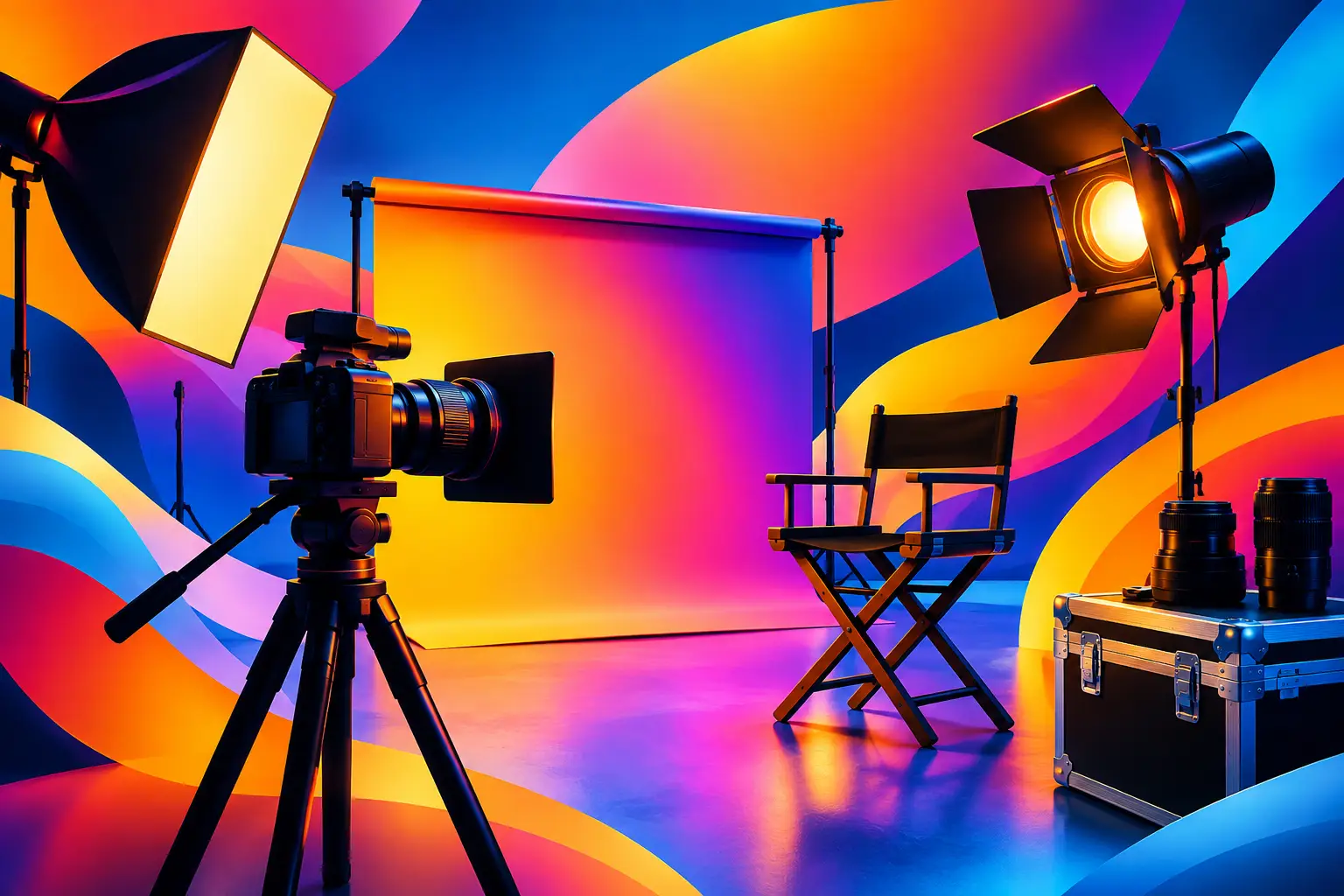
A lighting stand in the wrong place can cost more time than a missing lens. That is why studio equipment rental should begin with the image, not a generic kit list. Start with the finish your campaign, film, product shoot or social content needs, then choose the room, lighting control and support equipment that will get you there without overbuilding the set.
For a one-day content run, the right hire can keep a small crew fast and focused. For a commercial production, it can give the team the controlled conditions needed to repeat a look across multiple products, cast changes and camera setups. The principle is the same: hire for the brief, the crew and the pace of the day.
Studio equipment rental starts with the environment
Equipment does not perform in isolation. A daylight space asks different questions from a blackout studio, even when the camera package and lighting fixtures are identical. Before selecting anything, decide whether the brief needs natural variation or complete control.
A daylight-led studio suits editorial portraits, lifestyle scenes, food, fashion, product stories with softer texture and social content that needs an open, lived-in feel. The changing quality of natural light can be part of the visual language. It can also be a risk if the shoot requires precise consistency from morning to late afternoon. In that case, plan for light shaping, blackout options where available, or a schedule that prioritises daylight-dependent shots first.
A controlled blackout corner is built for a different kind of precision. It gives photographers and crews a clean starting point for sculpted portraits, e-commerce, motion work, colour-led campaigns and lighting setups where spill needs to be managed. You can build contrast deliberately, hold a repeatable exposure and create a look that is not dependent on the weather outside.
At Lit Studios, The Void and The Loft make that decision clear. One gives your lighting team control; the other brings daylight character. Choosing between them before discussing equipment prevents a familiar production problem: trying to force the room to behave like a different room.
Build the kit around the shot list
The shot list is more useful than a broad request for ‘studio lighting’. Read it as a production plan. How many distinct looks are required? Is the subject moving? Are there reflective surfaces? Will the crew shoot stills and video at the same time? Does the client need a hero image, cutdowns, behind-the-scenes footage and vertical assets from the same setup?
A simple product shoot may need only a controlled key source, a modifier, negative fill and stable support. A beauty or fashion setup may need more shaping options, flags, diffusion and enough stands to adjust quickly between frames. Video adds further considerations: continuous output, sound, practical lighting, power distribution and room for a monitor position.
Avoid hiring every possible accessory ‘just in case’. Extra kit can make a compact set harder to manage, especially with agency, client and talent present. At the same time, under-hiring creates delays when the team has to improvise support, diffusion or control after the shoot has started. The productive middle ground is a kit with a clear job for every item and a modest allowance for expected changes.
For most studio bookings, the useful questions are practical. What must stay fixed all day? What will move between looks? What needs to be adjusted from camera position? Which items are essential to the lighting plan, and which are simply contingency? Answering these before the booking helps the crew arrive ready to build rather than spend the first hour redesigning the setup.
Still photography and video do not have identical needs
Stills can often work with short, repeatable bursts of light and a tightly controlled frame. Video usually needs continuous output, longer takes and more attention to the parts of the room that sit beyond the crop. A setup that looks clean in a single still may reveal unwanted spill, noise or unwanted reflections once the camera starts moving.
If the project combines stills and motion, decide which format leads the lighting design. A stills-first setup may need adapting for video, while a video-first setup can slow down the photography workflow. Neither approach is wrong. It depends on the deliverables, the client’s priority and whether the schedule allows the crew to reset between formats.
Product work needs control beyond the light
Gloss, glass, metal and packaging create their own demands. The issue is often not output but reflection. A larger source can create a smoother highlight, while flags and negative fill can define an edge or remove an unwanted room reflection. Support equipment matters here because small changes in angle, height and distance can transform the result.
Allow time for test frames before the client arrives or before the full product range comes onto set. Once the reflections are working, mark key positions and keep the setup stable. Repeatability is what turns a good first frame into an efficient production day.
Plan the practical side of the hire
A well-equipped room still benefits from a clear production plan. Confirm access times, loading requirements, crew numbers, equipment collection or delivery arrangements, and the time needed to set up and strike. A six-hour booking is not six hours of shooting if the lighting build, set dressing and pack-down have not been accounted for.
Think about the people who need to work around the kit. A photographer may need clear access to camera position. A gaffer needs room to adjust heads and modifiers safely. Stylists, hair and make-up, talent, clients and producers all need somewhere to stand without crossing through the frame. The more people involved, the more valuable a simple, disciplined floor plan becomes.
Power planning also deserves attention. Check the requirements of the fixtures and accessories you intend to use, particularly when combining continuous lighting, monitors, charging stations and production equipment. Keep cable runs tidy, protect walkways and nominate someone to manage changes as the set evolves. These are small decisions, but they protect both the schedule and the working atmosphere.
When to hire less, and when to bring more
Smaller shoots benefit from restraint. If the brief is one talent, one background and a focused content list, a lean setup keeps the room flexible and lets the crew respond quickly. You do not need a large lighting build to make polished work. You need a considered one.
Larger productions should plan for redundancy where a failure would halt the day. That may mean an additional support option, spare power provision or duplicate essentials for a high-volume product workflow. The cost of contingency has to be balanced against the cost of lost time, client rescheduling and an incomplete deliverable list.
There is also a difference between equipment that improves the image and equipment that merely adds complexity. If an item will not materially change the frame, speed the workflow or solve a known technical issue, it may not earn its place on the call sheet. The best studio equipment rental plan is not the longest one. It is the one the crew can execute confidently.
Make the booking conversation specific
When discussing a studio hire, bring the references that define the look. A treatment, moodboard, rough shot list and intended crew size give the studio team a far better starting point than a vague request for a content space. Mention whether you need daylight, blackout conditions, stills, video, events or a combination of formats. Be clear about the equipment you expect to use and confirm availability before finalising the production plan.
It also helps to identify the non-negotiables. Perhaps the campaign needs a pure controlled background, an extended daylight window, room for a product table, or a practical layout for a crew working across stills and motion. Once those constraints are known, the right studio environment becomes easier to choose and the hire becomes more efficient.
A studio day should leave room for creative decisions, not avoidable technical surprises. Bring a clear brief, hire the tools that serve it, and let the space do the work it was designed to do.
Leave a Reply